binary-knight.com

JASON
KNIGHT

I build AI systems that have to show their work.

[1]

Overrule

File 01 of 04

A council of AI models that argue under rules of order and return a verdict with the reasoning on the record.

Most multi-model tools average their answers. Overrule makes the models argue: each quotes the exact claim it answers, raises objections with the condition that would resolve them, and may change its mind only by citing what changed it. A drafter writes a candidate and the others vote on that exact text, with every dissent kept verbatim.

Pointed at a repository, the drafter's change becomes a commit in an isolated checkout. The app runs the checks on that commit and voters judge the diff and the output, not a summary of it. Every sandbox level is measured on the host before it is offered. Other agents call it from the command line, and the exit status says whether the council settled the question or ran out of turns.

Node.js, no runtime dependencies. Apache 2.0.
A real meeting, seven minutes sped up to about thirty seconds. GPT-5.6 and two Claude models argue SQLite against Postgres for a side project, concede points, object, and vote on the final answer.

[2]

agentsec-pack

File 02 of 04

Adversarial tests that measure what an AI agent can reach from inside its sandbox.

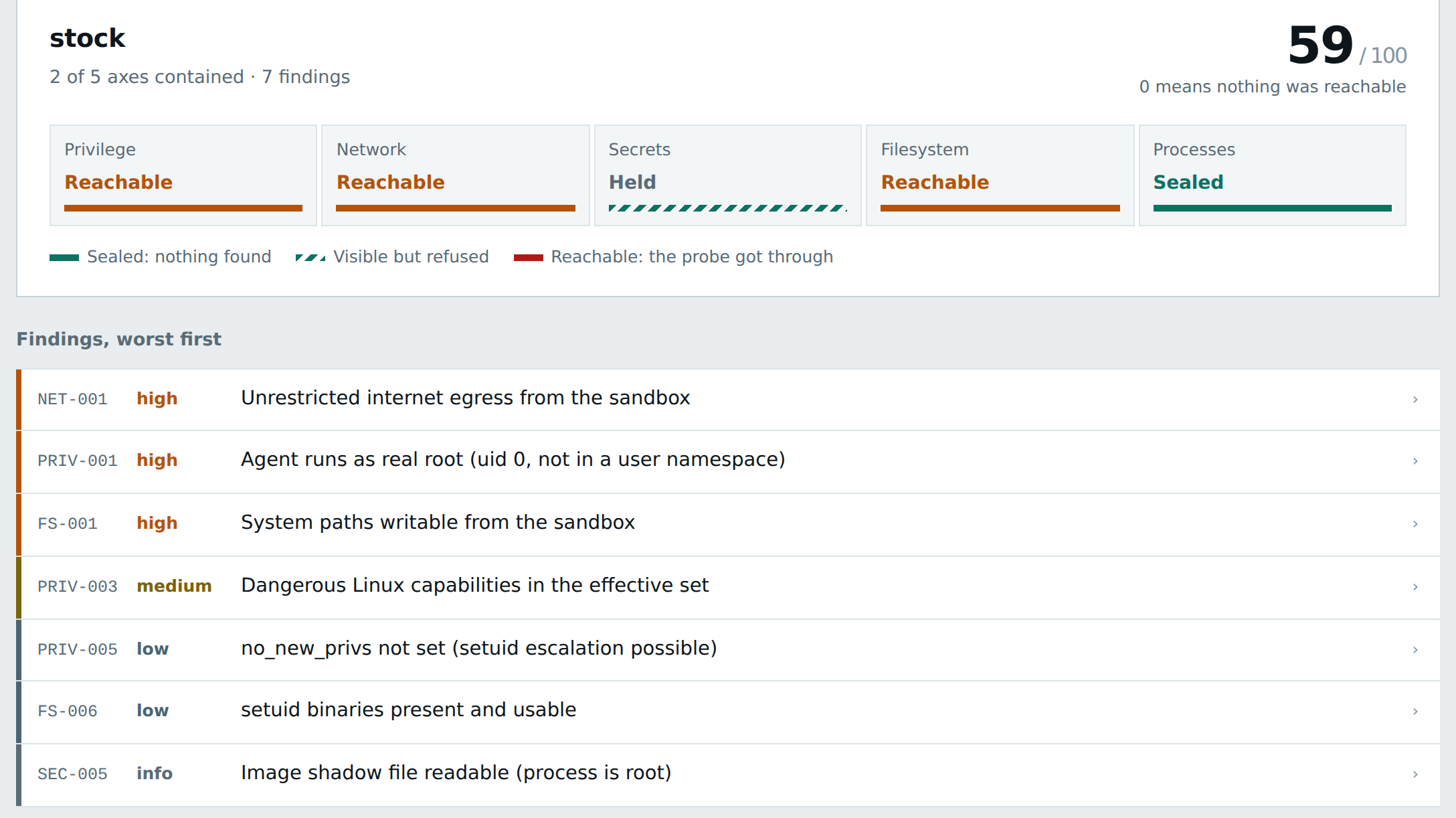
A transcript cannot tell you what an agent could have done. This probe runs inside the environment you actually deploy and scores what it can touch: the network, secrets, the host filesystem, privileges, other processes. The loop is measure, harden, measure again, and a budget turns the score into a gate that fails the build when a sandbox drifts looser.

Python. Overrule uses it to measure its own sandboxes before offering them.

An agentsec-pack report for a stock container: 59 of 100, findings listed worst first
  1. 15After the hardening flags the report recommends.
  2. 0With the network cut, and an agent that cannot reach its model does not work. Zero is not the target.
[3]

Usurper Reborn

File 03 of 04

A persistent text RPG where more than 130 autonomous characters live their lives around the clock.

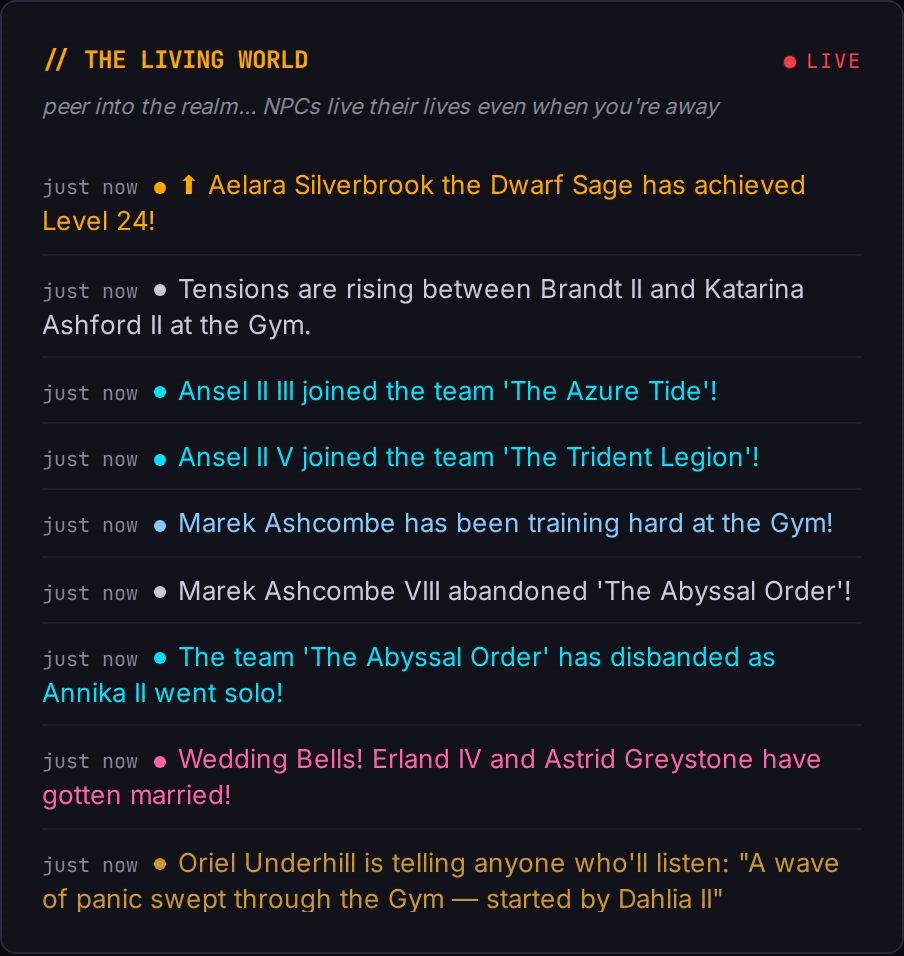
Every character is a goal-driven agent with thirteen personality traits and a memory weighted by importance. They take jobs, form gangs, fall in love, marry, and raise children who grow up into new adults, and they age and die whether or not anyone is logged in. Log back in and the news feed tells you what happened while you were away.

Players share one world through the browser, over SSH, or from any MUD client, with the realm's gossip channel bridged to Discord. Beneath the simulation is a hundred-floor dungeon, seven corrupted gods, and five endings. It began as a tribute to the 1993 door game it is named after.

C#, SQLite. GPL v2.

The Living World feed: NPCs levelling up, joining teams and getting married while players are away
130+
autonomous characters
13
personality traits
100
dungeon floors
7
corrupted gods
5
endings
[4]

LogWhisperer

File 04 of 04

Plain-language summaries of Linux server logs, written by a model that runs on the same machine.

It reads the journal, log files, and Docker containers, summarizes what matters through a local model with Ollama so no log leaves the server, and sends alerts to Discord with deduplication and rate limiting so a noisy night produces one message rather than a thousand.

Python. MIT.

[A] About

Councils of models that argue on the record, probes that measure what an agent can actually reach, and a world of autonomous characters that keeps living when nobody is watching. Everything here is open source.

[C] Contact